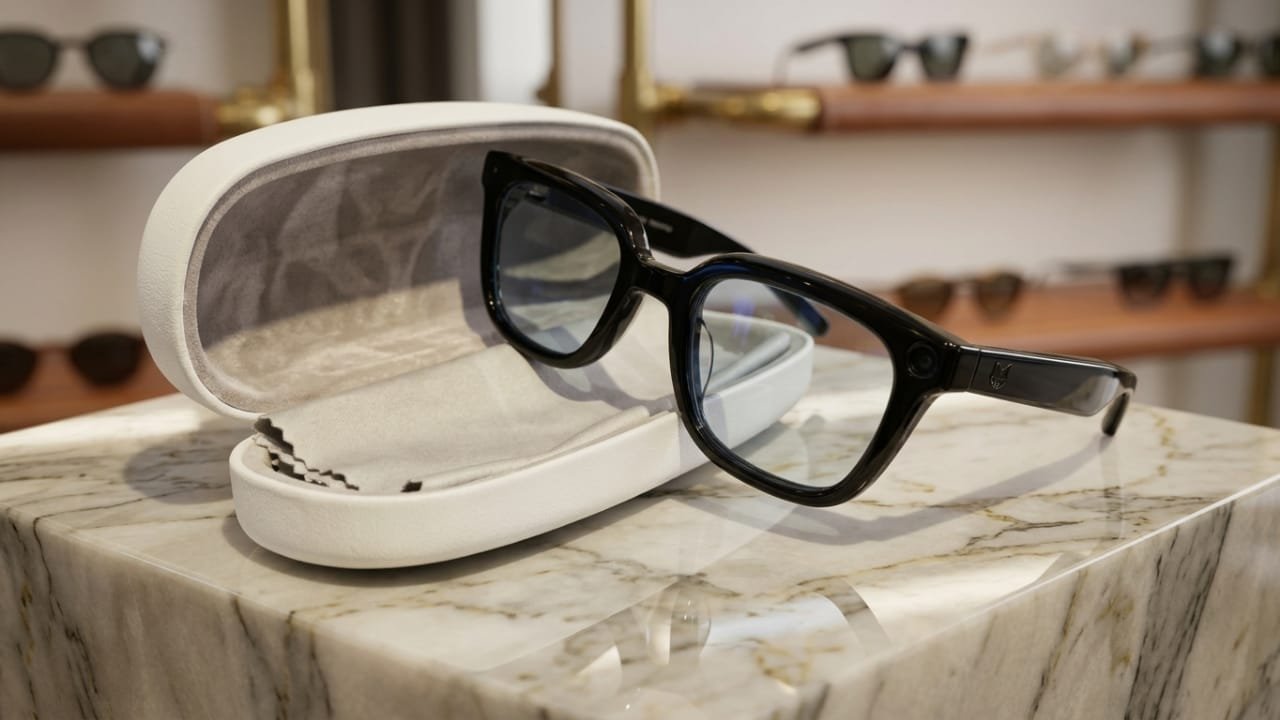
Samsung has officially introduced its first pair of smart glasses, called the Galaxy Glasses, at the Galaxy Unpacked July 2026 event. After giving an early preview at Google I/O 2026, the company has now revealed the device’s main features and hardware.
The new wearable combines artificial intelligence, voice control, and everyday convenience in a lightweight design. Samsung worked with Warby Parker and Gentle Monster to create glasses that look stylish while offering useful smart features. Although the company has shared the specifications, pricing and release details are still unknown.
Advertisements
Also read: Offline UPI Payments Through NFC May Soon Be Available in India
Snapdragon AR1 Gen 1 Powers the Experience
The Galaxy Glasses run on Qualcomm’s Snapdragon AR1 Gen 1 processor, which is built for smart eyewear. The chip allows many AI features to work directly on the device, helping improve speed while reducing dependence on cloud processing.
Samsung also says the glasses are designed to manage heat efficiently, allowing comfortable use for longer periods. Buyers will be able to choose from two frame styles to match their personal preferences.
Gemini AI Provides Everyday Assistance
A major feature of the Galaxy Glasses is the built-in Google Gemini AI assistant. Using the integrated camera and voice commands, the AI can understand what the user is looking at and provide helpful information without requiring a phone.
Some of the supported AI features include:
- Answering questions about objects or places in view
- Summarizing lengthy messages
- Reading notifications aloud
- Helping with restaurant reservations
- Performing everyday AI tasks
- Offering live translation during conversations
The goal is to make daily interactions faster and more convenient through hands-free voice control.
Built-In Camera for Photos and Videos
Samsung has included a camera that lets users capture photos and record videos from a first-person perspective. This makes it easier to document everyday moments without holding a smartphone.
The glasses can also record what the user sees during phone calls, and the content can be shared quickly through Samsung’s companion app. This feature may be useful for travel, outdoor activities, tutorials, and content creation.
Battery Designed for All-Day Use
According to Samsung, the Galaxy Glasses can provide up to 9 hours of use on a single charge.
The charging case offers up to seven additional full charges, making it easier to keep the glasses powered throughout the day without frequent access to a charger.
Multiple Ways to Control the Glasses
Users can interact with the Galaxy Glasses in several ways, including:
- Touch controls
- Voice commands
- Gesture controls
These options allow users to play music, answer calls, launch Gemini AI, and use other features without taking out their smartphone.
Entertainment and Daily Features
Along with AI functions, the Galaxy Glasses are designed for everyday use. They support several common tasks, including:
- Listening to music
- Making and receiving phone calls
- Taking photos
- Recording videos
- Hearing spoken notifications
Samsung says the overall experience is designed to be simple, lightweight, and easy to use throughout the day.
Price and Availability
Samsung has not yet confirmed the official price or launch date of the Galaxy Glasses. The company is expected to announce availability and supported regions in the near future.
Also read: Apple Increases Apple Music and Apple One Prices in India: Updated Plans and Charges
Conclusion
The Galaxy Glasses mark Samsung’s entry into the smart eyewear category with a strong focus on AI-powered features and hands-free convenience. Equipped with the Snapdragon AR1 Gen 1 processor, Google Gemini AI, a built-in camera, and long battery life, the wearable is designed to assist users in everyday situations. While pricing remains unannounced, Samsung’s first smart glasses have the potential to become a strong competitor in the growing smart eyewear market.

I am a passionate Tech Writer with strong industry experience. I enjoy exploring the latest technological innovations and sharing clear, helpful insights with my audience.”
Advertisements