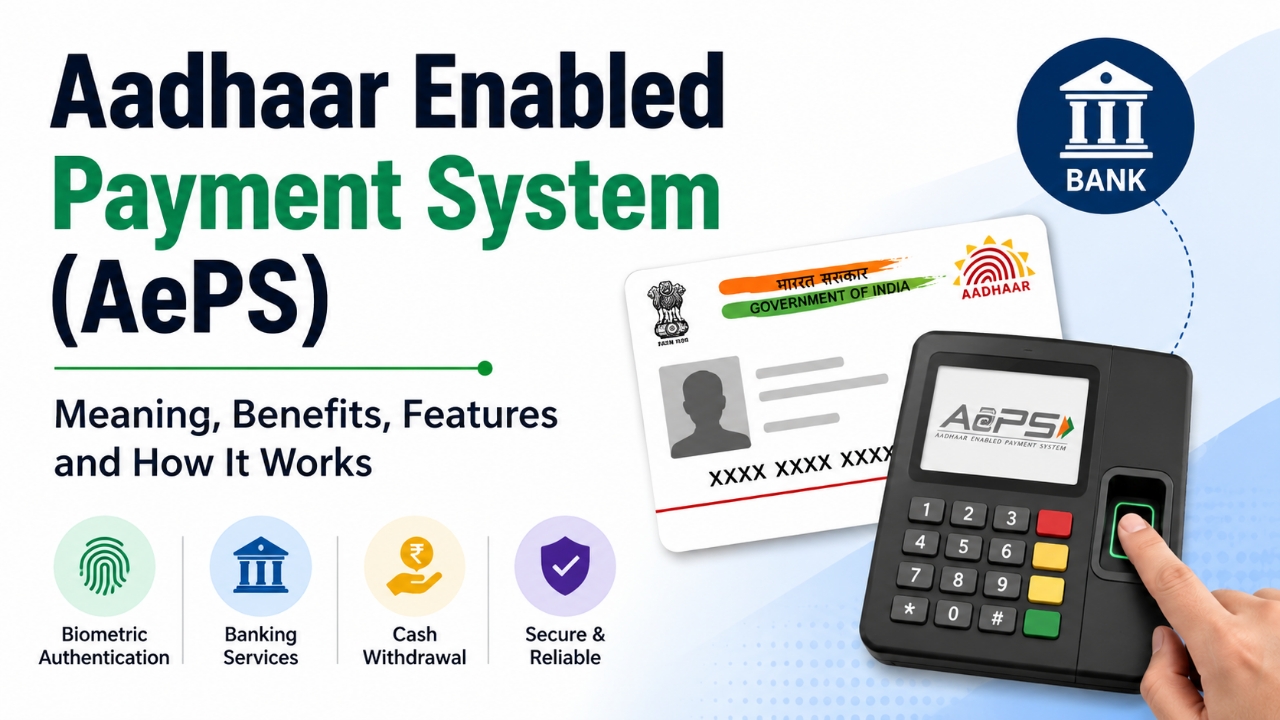
India’s digital payment ecosystem has grown rapidly over the years, making banking services more accessible to people across the country. One important part of this ecosystem is the Aadhaar Enabled Payment System (AePS), a service developed by the National Payments Corporation of India (NPCI).
AePS allows bank customers to perform basic banking transactions using their Aadhaar number and biometric verification. This service is especially useful for people living in rural and remote areas where access to bank branches and ATMs may be limited.
Advertisements
In this guide, you’ll learn what AePS is, how it works, its benefits, requirements, and how to use it for everyday banking needs.
Also read: Apple May Introduce Smart Theft Protection for iPhones Using AI
What Is Aadhaar Enabled Payment System (AePS)?
Aadhaar Enabled Payment System, commonly known as AePS, is a banking service that enables customers to access their bank accounts through Aadhaar-based authentication.
The system was introduced by NPCI to support secure and convenient banking services. Initially, it was used mainly for government benefit transfers. Over time, its scope expanded, allowing customers to perform various banking transactions without needing a debit card or visiting a bank branch.
With AePS, users can:
- Withdraw cash
- Check account balance
- Deposit money
- Transfer funds
- View mini statements
- Make small digital payments
- Pay for selected services
All transactions are authenticated using biometric verification such as fingerprint scanning.
How Does AePS Work?
AePS operates through banking agents, micro ATMs, and authorized service points. These agents act as a bridge between banks and customers, helping people access banking services closer to their homes.
To complete a transaction, the customer provides their Aadhaar number linked to a bank account and verifies their identity through biometric authentication. Once the details are verified, the requested transaction is processed instantly.
The system helps extend banking services to areas where traditional banking infrastructure may not be easily available.
Key Benefits of AePS
AePS offers several advantages for bank account holders across India.
1. Banking Without a Debit Card
Customers can access basic banking services without carrying an ATM or debit card. Aadhaar authentication is sufficient for most transactions.
2. Easy Access to Banking Services
People can perform transactions through nearby banking agents or micro ATMs instead of traveling long distances to reach a bank branch.
3. Secure Transactions
Every transaction requires biometric verification, adding an extra layer of security and helping reduce unauthorized access.
4. Support for Rural Areas
AePS plays an important role in bringing banking services to villages and underserved regions, helping more people participate in the formal financial system.
5. Convenient Payment Option
Users can make eligible payments and complete certain financial transactions using Aadhaar-based authentication where supported.
Services Available Through AePS
Customers with an Aadhaar-linked bank account can access the following services:
- Cash withdrawal
- Cash deposit
- Balance enquiry
- Mini statement
- Fund transfer between eligible accounts
- Aadhaar-based payments at supported locations
Availability of services may vary depending on the bank and service provider.
Requirements for Using AePS
Before using AePS, make sure you have the following:
- An Aadhaar number linked to your bank account
- A valid bank account
- Biometric authentication (such as fingerprint verification)
- Details of the transaction you want to perform
Without Aadhaar-bank account linkage, AePS services may not be available.
How to Use AePS for Banking Transactions
Follow these simple steps:
Step 1: Visit an AePS Service Point
Go to a nearby micro ATM, banking correspondent, customer service center, or authorized AePS outlet.
Step 2: Select the Required Service
Inform the operator whether you want to withdraw cash, check your balance, deposit money, or perform another available transaction.
Step 3: Provide Aadhaar Details
Enter or share the Aadhaar number linked to your bank account.
Step 4: Complete Biometric Verification
Verify your identity using your fingerprint or other supported biometric method.
Step 5: Confirm Bank Details
Select the bank associated with your Aadhaar-linked account.
Step 6: Receive Transaction Confirmation
Once verification is successful, the transaction will be processed, and you will receive cash or a transaction receipt, depending on the service used.
Frequently Asked Questions (FAQs)
1. Can I withdraw cash through AePS without an ATM card?
Yes. AePS allows eligible users to withdraw cash using Aadhaar authentication and biometric verification without requiring a debit card.
2. Is Aadhaar linking mandatory for AePS?
Yes. Your Aadhaar number must be linked to your bank account before you can use AePS services.
3. Is AePS safe?
AePS uses biometric authentication to verify the identity of the account holder, making transactions secure when used through authorized service points.
4. Where can I use AePS?
You can use AePS at participating micro ATMs, banking correspondents, customer service centers, and other authorized locations that support the service.
Also read: WAPro App for WhatsApp – Features, Uses & Helpful Tips
Conclusion
AePS has made basic banking services more accessible for millions of people across India. By combining Aadhaar authentication with banking services, it offers a simple and convenient way to withdraw cash, check balances, and perform essential transactions without relying on debit cards or visiting a bank branch. For individuals living in rural and remote areas, AePS continues to be an important tool for accessing financial services closer to home.

I am a passionate Tech Writer with strong industry experience. I enjoy exploring the latest technological innovations and sharing clear, helpful insights with my audience.”
Advertisements