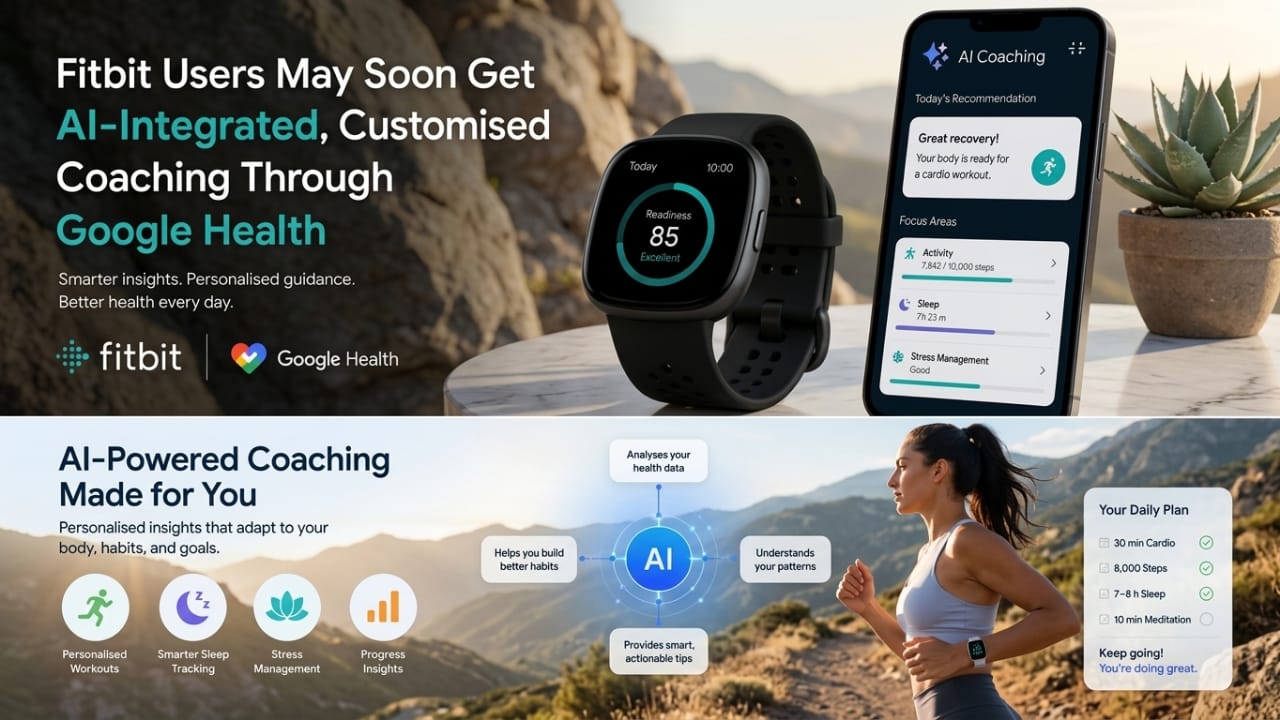
Fitness tracking devices are becoming more advanced every year, and Fitbit users may soon see a major upgrade in how their health data is used. Reports suggest that Google Health is working on new AI-powered coaching tools that could deliver more personalised fitness guidance through Fitbit devices.
Instead of only showing steps, calories, or sleep hours, the system may help users better understand their daily habits and provide practical suggestions based on their lifestyle. The goal appears to be making fitness tracking more useful and easier for everyday users.
Advertisements
Also read: WhatsApp May Introduce a New Liquid Glass Design for iPhone Users
Google Health Could Add More Intelligent Fitbit Features
Google has been focusing heavily on health technology since acquiring Fitbit. According to recent reports, the company is testing AI-based tools that can study health information collected from Fitbit smartwatches and fitness trackers.
The system may analyse data such as:
- Sleep quality
- Daily activity
- Heart rate
- Stress levels
- Workout performance
Based on this information, Fitbit could offer personalised recommendations instead of only displaying raw numbers. Users may receive simple guidance that helps improve overall wellness and daily routines.
Personalised Workout Suggestions May Become More Helpful
One of the biggest expected upgrades is customised workout coaching. The AI system could recommend exercises depending on factors like:
- Energy levels
- Recovery time
- Previous workouts
- Activity history
For example, after a hard workout session, Fitbit may suggest lighter exercise or additional recovery time. On more active days, it could recommend more challenging activities.
This feature may especially help beginners who are unsure how to build a balanced fitness routine. Rather than searching online for workout ideas, users could receive suggestions directly inside the Fitbit app or smartwatch.
Over time, the AI system may also learn from a user’s habits and provide more accurate recommendations.
Sleep And Stress Insights Could Improve
Fitbit devices already include sleep and stress tracking features, but AI may make these tools more detailed and useful.
The upcoming system could analyse sleep patterns more deeply and explain how sleep affects:
- Energy
- Mood
- Daily performance
- Recovery
Users might also receive practical tips for improving sleep quality. These suggestions could include reminders for bedtime, relaxation exercises, or breathing activities.
Stress monitoring may also become smarter. The AI could detect unusual patterns in heart rate or activity levels and help users recognise signs of stress earlier.
AI Coaching Could Encourage Better Daily Habits
Many people stop using fitness trackers regularly after a few months because they lose motivation or don’t fully understand the data.
AI-based coaching may help solve this problem by offering simple and realistic guidance. Fitbit could provide:
- Daily reminders
- Small health goals
- Easy-to-understand progress reports
- Personal wellness tips
For example, users may receive suggestions to:
- Drink more water
- Walk after long sitting periods
- Improve bedtime routines
- Stay active during the day
The focus may be on building healthier habits gradually instead of overwhelming users with complicated fitness plans.
Fitbit Premium Features May Expand Further
Some of these upcoming AI tools could become part of Fitbit Premium. The subscription service already offers advanced health reports, guided programs, and wellness content.
Future AI-powered additions might include:
- Tailored fitness plans
- Voice-guided coaching
- Smarter health predictions
- Recommendations based on age and lifestyle
Although Google has not officially confirmed all details, the company appears to be investing heavily in AI-driven health technology for wearable devices.
Privacy And Data Security Will Remain Important
As AI systems use more personal health information, privacy concerns will naturally become more important.
Fitbit users may want clear information about:
- How health data is stored
- What information is shared
- How AI uses personal data
The system could require access to information like sleep patterns, heart rate, and activity history to provide personalised coaching. Because of this, strong privacy controls and transparent policies will likely be essential.
Google may also allow users to choose which types of data they want to share with the AI system.
Also read: WhatsApp Launches Business AI in India to Help Small Businesses Manage Customer Chats
Final Thoughts
AI-powered coaching could become one of the biggest improvements for Fitbit users in the coming years. Instead of acting only as a fitness tracker, Fitbit may evolve into a smarter digital health assistant that provides personalised support every day.
From workout planning and stress management to better sleep habits, these upcoming tools could make health tracking simpler and more useful for regular users.
While official details are still limited, the future of wearable fitness technology appears to be moving toward smarter, more personalised experiences powered by artificial intelligence.

I am a passionate Tech Writer with strong industry experience. I enjoy exploring the latest technological innovations and sharing clear, helpful insights with my audience.”
Advertisements